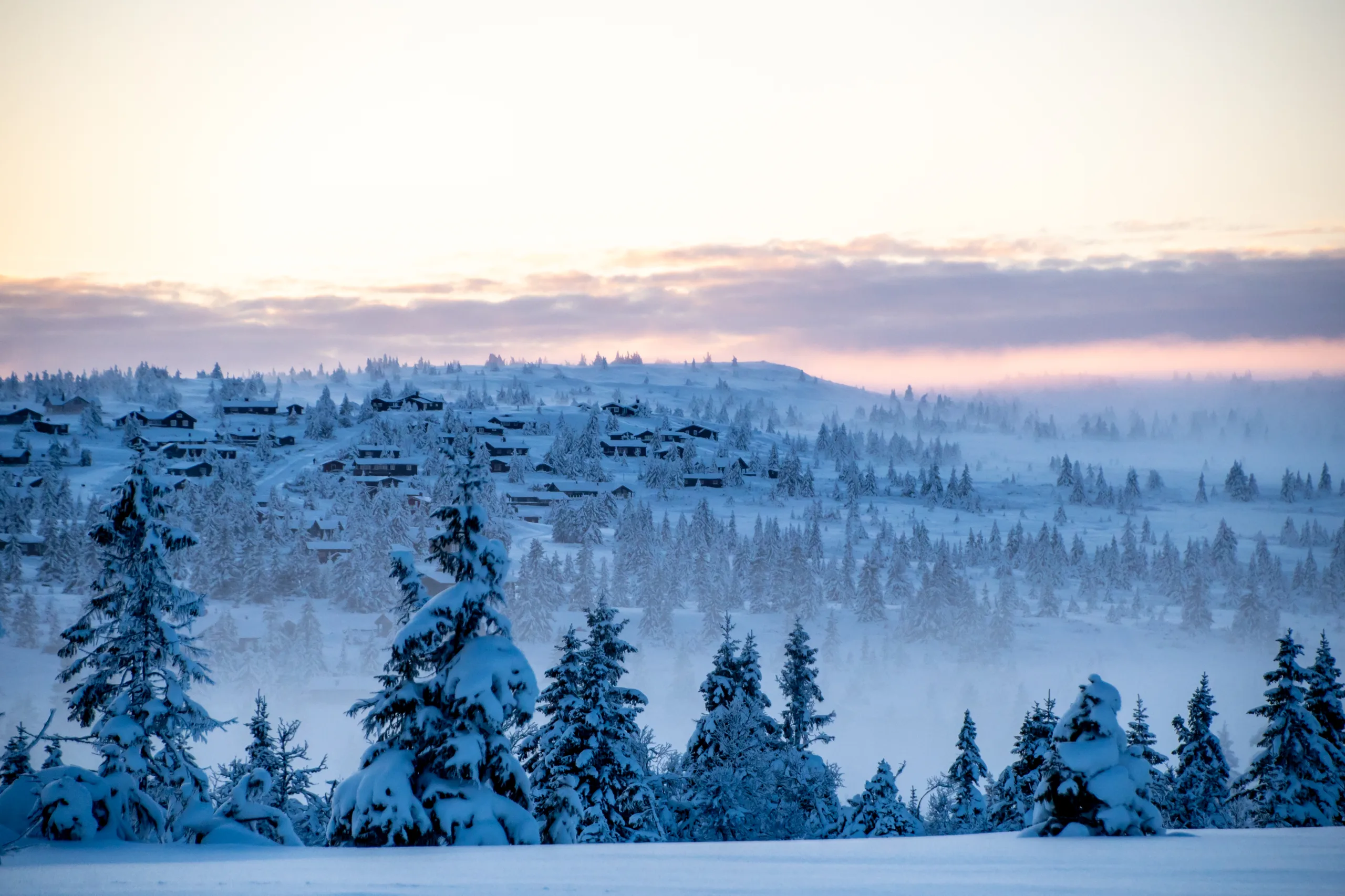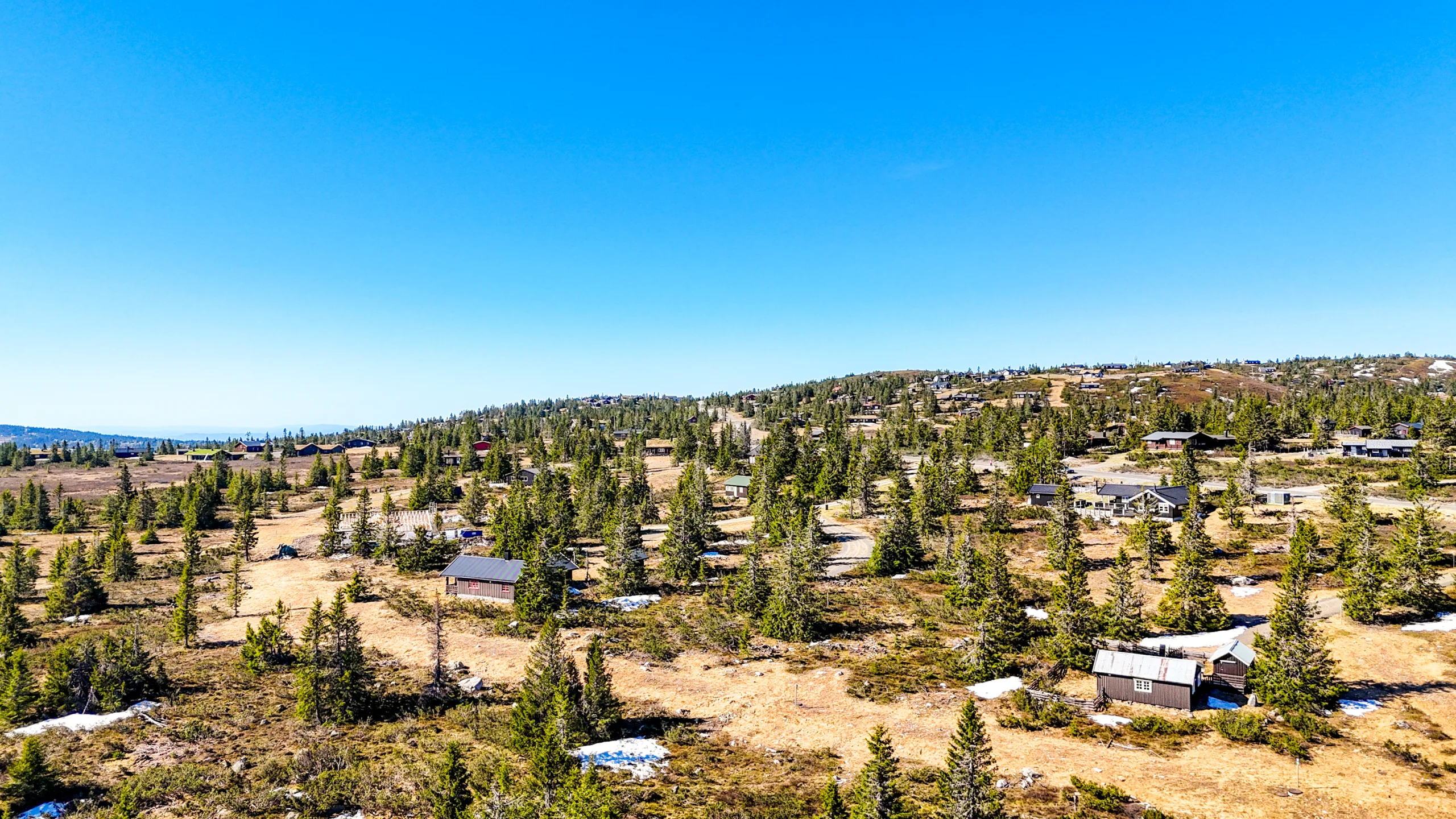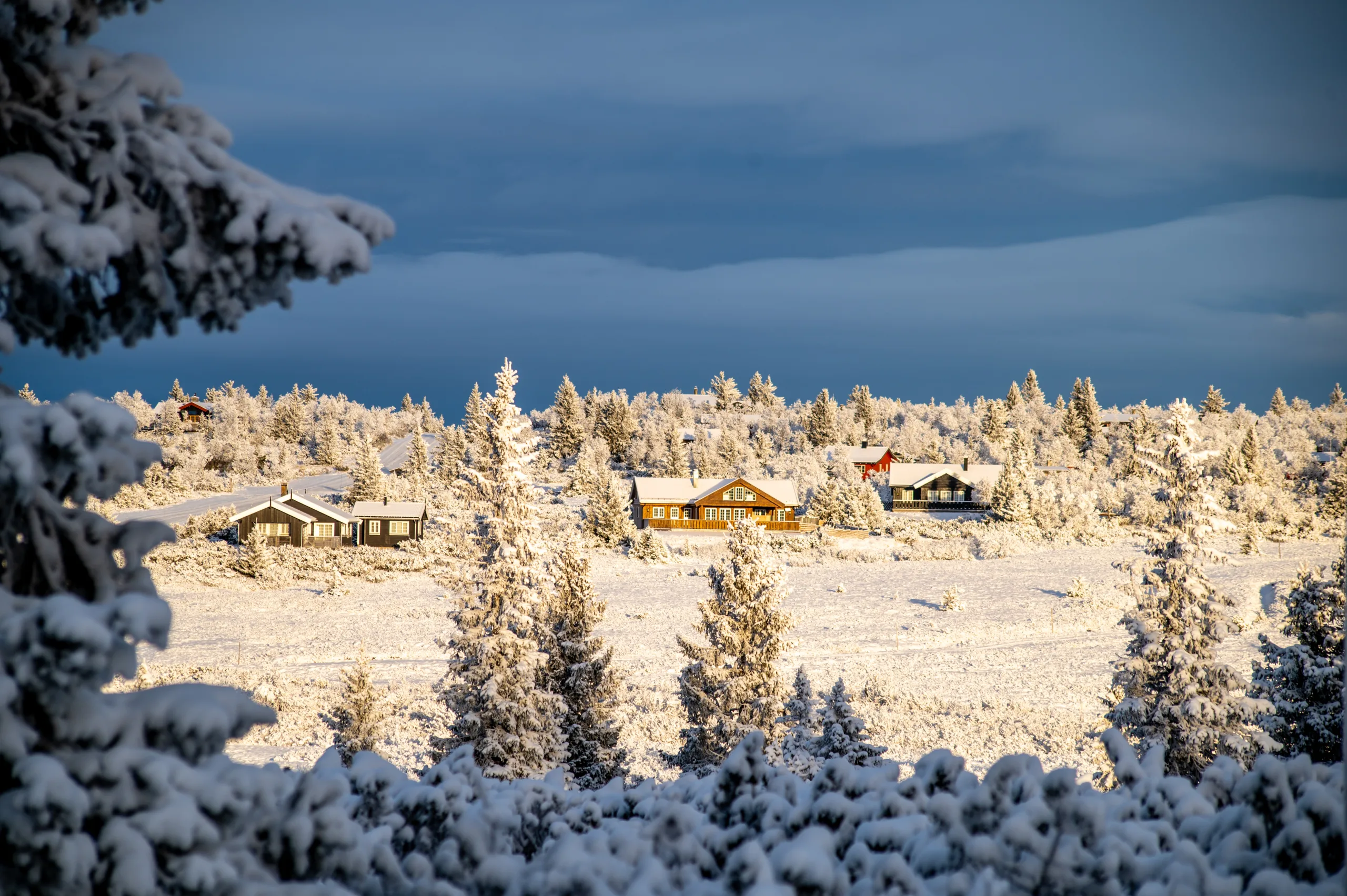

In mountain and wilderness areas, natural light and darkness are important environmental, experiential, and aesthetic qualities that must be preserved.
For scattered buildings and cabin areas surrounded by LNF areas (Agriculture, Nature, and Leisure), outdoor lighting shall be limited. Avoiding light pollution is encouraged. For leisure buildings, all lighting should be switched off when the building is not in use.
In Ringsaker Municipality, the following applies to buildings in the Ringsakerfjellet mountains:
- For Kroksjølia, Kuåsen, Elgåsen, and Aksjøen, outdoor lights should not be visible from a distance. Any outdoor lighting for cabins should be placed on the building wall and be shielded so that only the building and the immediate terrain are illuminated. Outdoor lights that shine outwards and cause glare must be avoided. The intensity of the outdoor light source shall not be stronger than absolutely necessary, and floodlight effects must be avoided.
For areas in Åstdalen, mountain farm areas, and scattered cabin developments in Ringsakerfjellet:
- As few outdoor light sources as possible
- Outdoor lamps must be permanently mounted on the building and limited to the entrance area
- No lighting shall be established for roads or parking areas, and light points on gateposts, fences, or similar are undesirable
- Outdoor lamps must shine downwards towards the area intended to be lit
- The light source itself must be shielded with material that is opaque and impermeable to light, so that the light source (bulb) is shielded from the sky and invisible from a distance
- The light intensity must be as low as possible
- Light sources must have a warm color temperature
- Lights must be switched off when the property/building is not in use
- In mountain farm areas and similar, outdoor lighting must be practiced with caution and adapted to respect the cultural landscape, cultural environment, and architectural setting
Outdoor lighting installed before the municipal plan provisions came into force (Dec 21, 2022) may be kept. It is assumed that outdoor lighting also complies with any zoning regulations applicable to the property. Owners are encouraged to adapt existing lamps to the new rules.
How does artificial lighting affect the environment?
Light pollution has a particular impact on insects, a large and diverse group of species affected in various ways. Some species are attracted to light, while others avoid it.
The biological clocks of mammals can be disrupted, leading to changes in foraging patterns.
Birds are affected through earlier morning activity and earlier nesting periods.
Trees become less hardened to survive the winter when exposed to excessive light in the autumn.
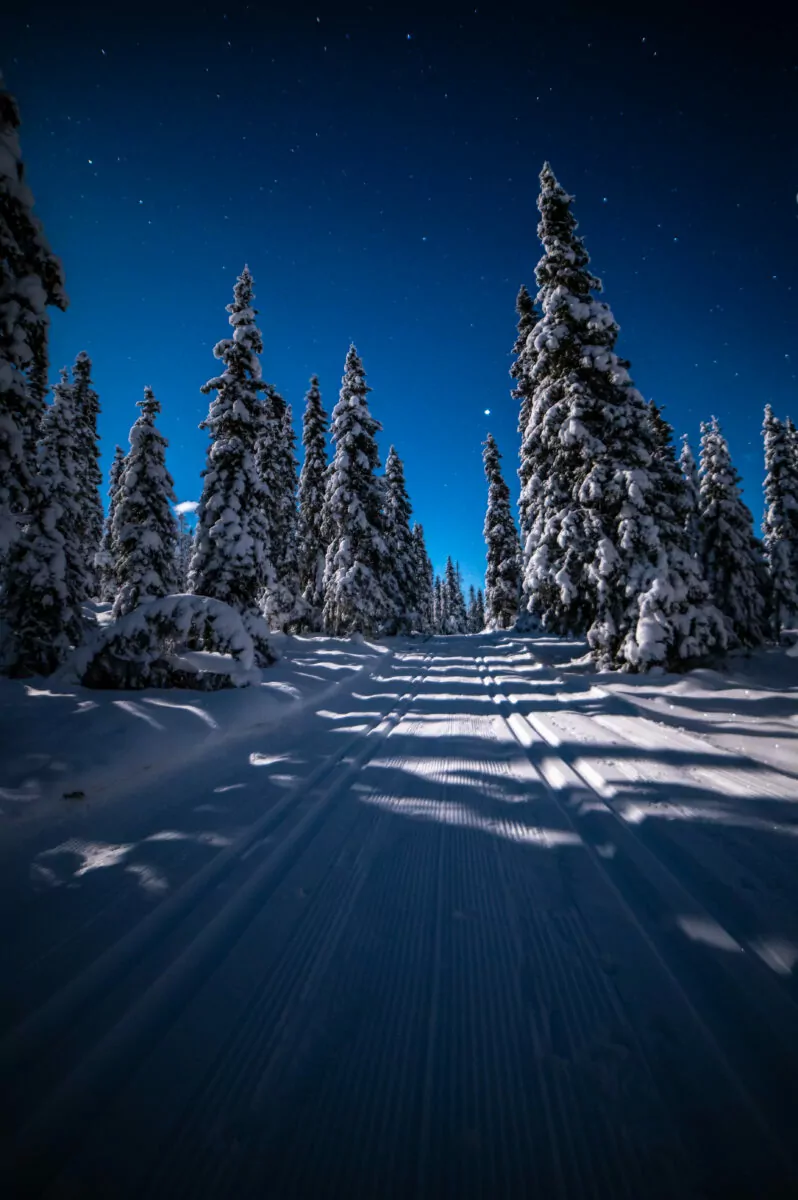
Highly reflective white surfaces from snow and low levels of natural light mean that the alteration of natural light conditions by artificial lighting is particularly significant.
When and how the light is turned on, what is illuminated, the amount of light, and the type of light used are all factors that affect energy efficiency.
The view of the sky can be greatly improved by reducing light pollution. Light reflects in the atmosphere and places a veil between us and the sky.
Source: bevarmorket.no